The 13th Wish
How my Yule log wishes tradition led me to growing my own cannabis this year.

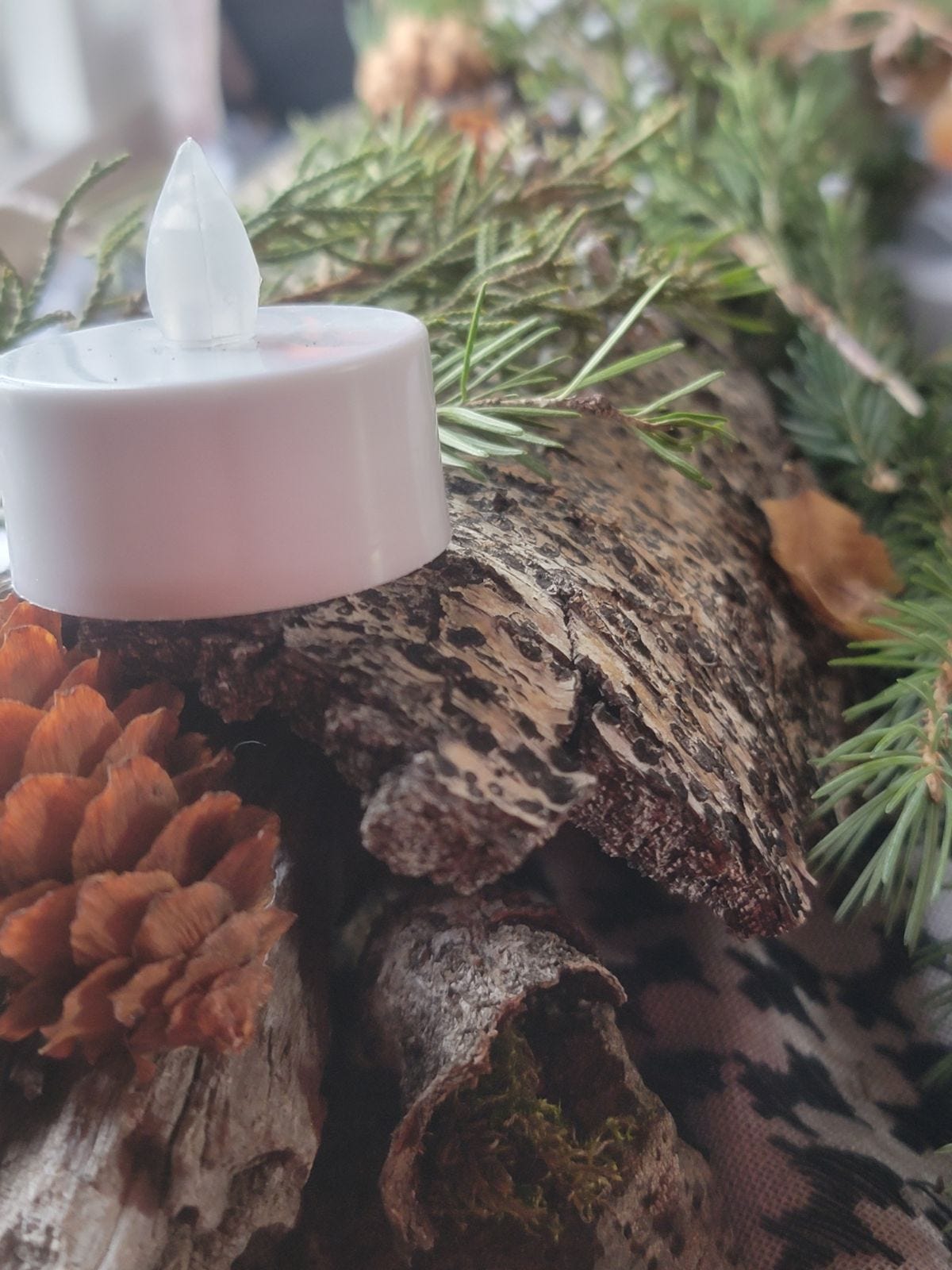
Yule is a pre-Christian Germanic and Norse winter solstice festival, observed around December 21. It marked the longest night of the year and the return of the sun, a threshold moment between darkness and light, death and renewal.
There is a moment every year that most of us sleep through. It arrives in the deep of December, in the longest night of the year, when darkness peaks and then, almost imperceptibly, begins to retreat. The ancient Germanic and Norse peoples called this moment jól, what we now recognize as Yule. It was not a holiday in the modern sense. It was a threshold. A hinge point between what had been and what was coming. A time when the veil between intention and reality was considered thin enough to push something through.
Yule predates Christmas by centuries. When Christianity moved through Northern Europe it absorbed the tradition rather than replacing it, which is why so much of what we call Christmas carries older bones underneath it. The Yule log. The evergreen. The candles held against the dark. These are not decorations, they are memory.
The log gathering is a ritual that I enjoy each Winter Solstice.
The Yule log tradition is one of the oldest surviving solstice practices. Traditionally a large log, often oak or ash, was brought in from the forest and burned through the night as an offering of warmth and an invitation of light back into the world. The ashes were kept afterward, used for protection, healing, or spread across fields as a blessing for the coming growing season.
There was one ethic attached to the gathering that has stayed consistent across cultures and centuries: you did not cut from a living tree. The log was found, gifted, or fallen. Taking from something still living was considered disrespectful, a disruption of the reciprocity the ritual was meant to honor.
This past Yule, I walked into the woods and gathered exactly that way. Fallen pieces, beautiful ones, already returned to the earth and ready to be called back into purpose. My partner and I gathered aspen tree fallings, pine combs, pine needles, and juniper. We built the log together and sat down to write our wishes, thirteen of them, one for each lunar cycle in a year, honoring a way of tracking time that existed long before any calendar told us what month it was.
After Yule is completed, we return the log and all the nature we gathered to make it beautiful right back to where we found it. It felt like the right way to say thank you; to close the ritual the same way we opened it, with respect for what the Earth offered us.
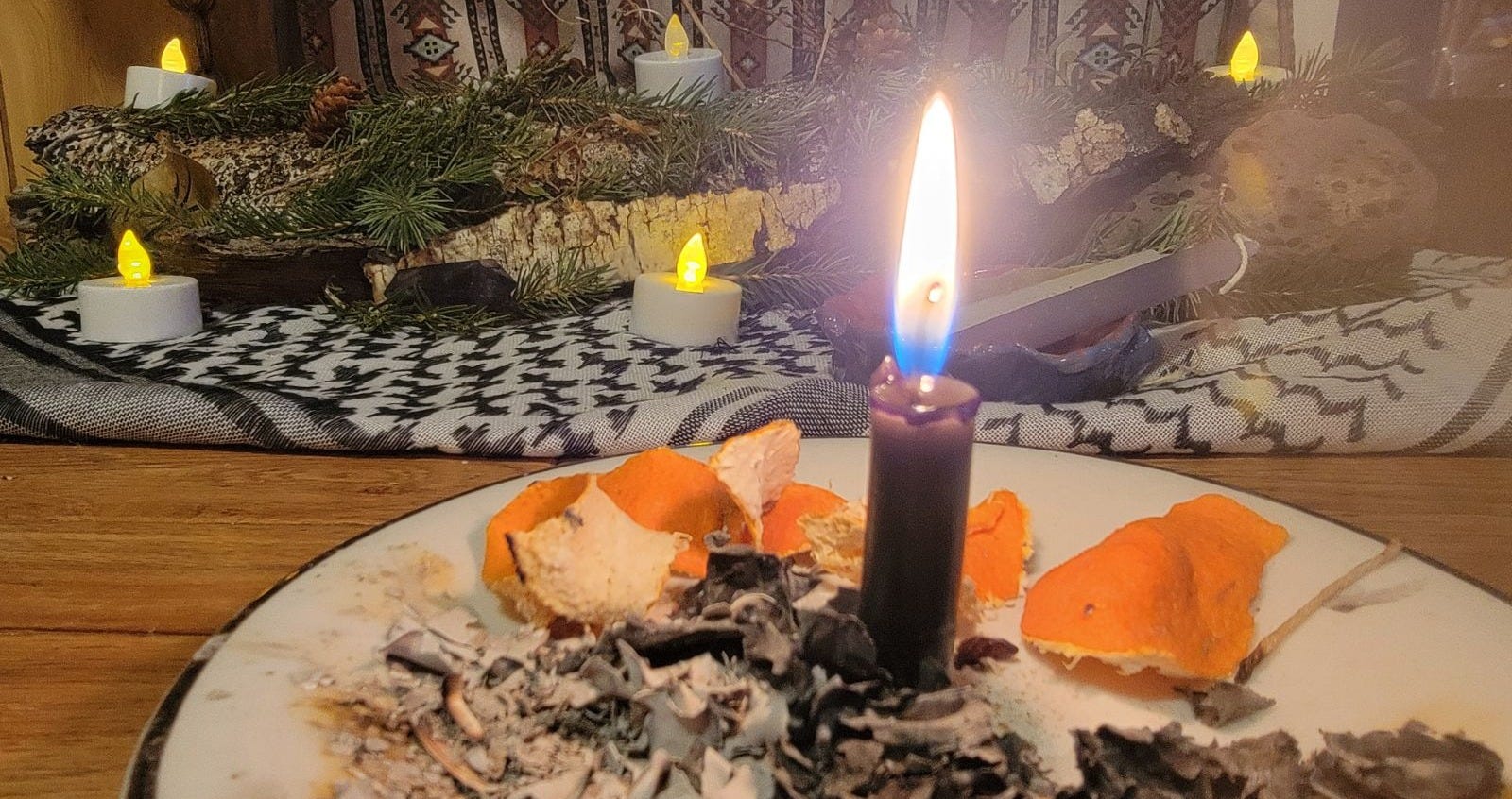
The wishes themselves carried their own ritual, each winter evening, one burning into the Universe, released and received.
Twelve wishes go out into the world. The thirteenth you keep. It belongs only to you, and unlike the others, it carries a condition: this one you have to take care of yourself. The universe does not carry the 13th wish. You do.
I did not know what to expect when I created my wishes. I knew that no matter the result of the 13th wish, I could handle it, and it would feel aligned. Each night we honored the Winter Solstice by burning away one wish, withholding the secrets of which were sent to the ethos and which one stayed, standing lastly for ourselves to claim and honor.
I opened the 13th wish with butterflies that felt less like flutters and more like fireworks, my whole body a back road, every bump felt.
What came out was this: Build a better relationship with cannabis. Grow your own medicine this year.
I sat with that for a moment. I had not planned it. It arrived the way true things tend to, not dramatically, just clearly. The 13th wish does not surprise you with something foreign. It names what you already know. I folded the paper, and I started to research.
Cannabis is sacred. Slowing down, being intentional, making it a practice, that is what this journey is asking of me.
The idea of an intentional relationship with a plant is not new. It is, in fact, one of the oldest frameworks human beings have ever used. Across traditions, Ayurvedic medicine, curanderismo, Indigenous plant ceremonies, Rastafari sacrament, cannabis has been understood as a sacred and medicinal plant that requires respect, not just consumption. The grower-plant relationship in these traditions is not separate from the medicine. It is part of it.
The science I fell in love with years ago working in the cannabis industry. The entourage effect, the way cannabinoids and terpenes work together in the whole plant more effectively than any isolated compound, is essentially modern research confirming what plant medicine traditions have always known.
The plant works best when it is treated as a whole, living system. You find a deeper knowing and understanding of its chances to heal, support, and teach you something you may have not been aware of yet. Even if you don’t smoke recreationally, or you do, deeper truth lies within any plant when you nurture it from seed to harvest.
I watched my mother find real relief in cannabis when she was sick with Leukemia. That experience moved something in me from curiosity into something closer to reverence. The plant is not just interesting to me. It is meaningful. I realized at some point that being a recreational user was not the relationship I actually wanted with something I held that way. Intentionality was always where I was headed.
The wish just said it out loud.
Early Spring in Colorado was unexpected, but I pivot and flow with the season.
Right now, I have seedlings germinating. Four strains, a lot of research, and the particular kind of focus that arrives when something finally aligns with what you actually care about. I prepped thoroughly for the growing season ahead. I planned to start in March and have my seedlings ready to be outside by the end of May. I’m proud of what I’ve learned so far, and I’m very excited to learn how to grow my own medicine. At the moment it feels like a gift.
This is not the last you will hear about the grow. I plan to document the journey here, the wins, the learning curves, the moments where the plant teaches me something I did not expect. If you want to follow along, this is the place to do it.
Yule is a planting tradition disguised as a fire ritual. You gather in the dark, you name what you want to call into the light, and then the year begins. The log burns. The ashes go back to the Earth. Somewhere in the weeks that follow, if you did it right, you find yourself with your hands in the soil, making good on what you wrote.
If you found your way to this piece and you are not yet a subscriber, consider this your invitation. Digital Collective is where I write about the things that matter to me, culture, intention, community, and the stories that do not always make it into the louder conversation. It is a good place to land if you are looking for something real.
Subscribe below and come grow with me.
xo
Jarika Moon
Stay Connected <3
Digital Collective Podcast Host
Author of a speculative science fantasy series: “Jarika Moon and the Secret Frequency,” found on the Digital Collective Podcast.
Sources:
Britannica: Yule (February 2026) https://www.britannica.com/topic/Yule-festival
History.com: How the Vikings Celebrated Yule (December 2025) https://www.history.com/articles/viking-yule-holiday-winter
Wikipedia: Yule https://en.wikipedia.org/wiki/Yule
Nicole's Ritual Universe: Yule Log: Making and Burning Traditions https://mysticryst.com/blogs/the-mystic-journal/yule-log-making-burning-traditions
Day Translations: The Origins and Traditions of Yule https://www.daytranslations.com/blog/the-origins-and-traditions-of-yule/